
Things to do in Kilkenny along the Medieval Mile
The main things to do in Kilkenny fit around the Medieval Mile, the route connecting Kilkenny Castle and St Canice’s Cathedral through the city centre. Use those landmarks to organise your visit, then choose a merchant house, a museum or contemporary art according to your interests. The route is a way of exploring the city, with individual attractions making their own admission arrangements.
For a first visit, decide which interiors matter before filling the day with stops. The castle tells a long Butler-family story; the cathedral combines medieval architecture with a separate round-tower climb. Rothe House brings domestic and trading life into the picture. A guided Medieval Mile walk helps connect the places, while independent visits leave more room for a particular building.
Castle, cathedral and merchant houses
Notice dated 2 November 2026: Kilkenny Castle’s building is closed from 2 November 2026 at 13:00 until 5 November 2026 at 09:30 for filming; parkland remains open. Separate the interior visit from an outdoor stop. Read the castle visitor guide for direct booking, admission and building access.
St Canice’s Cathedral has cathedral-only, tower-only and combined admission. The climb involves 121 steps and internal ladders, with weather affecting access. The combined ticket featured here covers cathedral entry with a self-guided map and the round tower; its validity on your chosen date is not a day-long guided tour.
On Parliament Street, Rothe House consists of three houses, paved courtyards and a restored garden, built for John Rothe and Rose Archer between 1594 and 1610. Allow the house its own visit rather than treating it as a street facade. Look up the current opening arrangements directly when fixing your route.
Cathedral and tower
Explore the cathedral with a map and climb its round tower when weather permits.
Hand-picked tours, booked through GetYourGuide. Prices are indicative starting prices in euros (as of October 2026). Tap a tour for live availability and the current price in your currency.
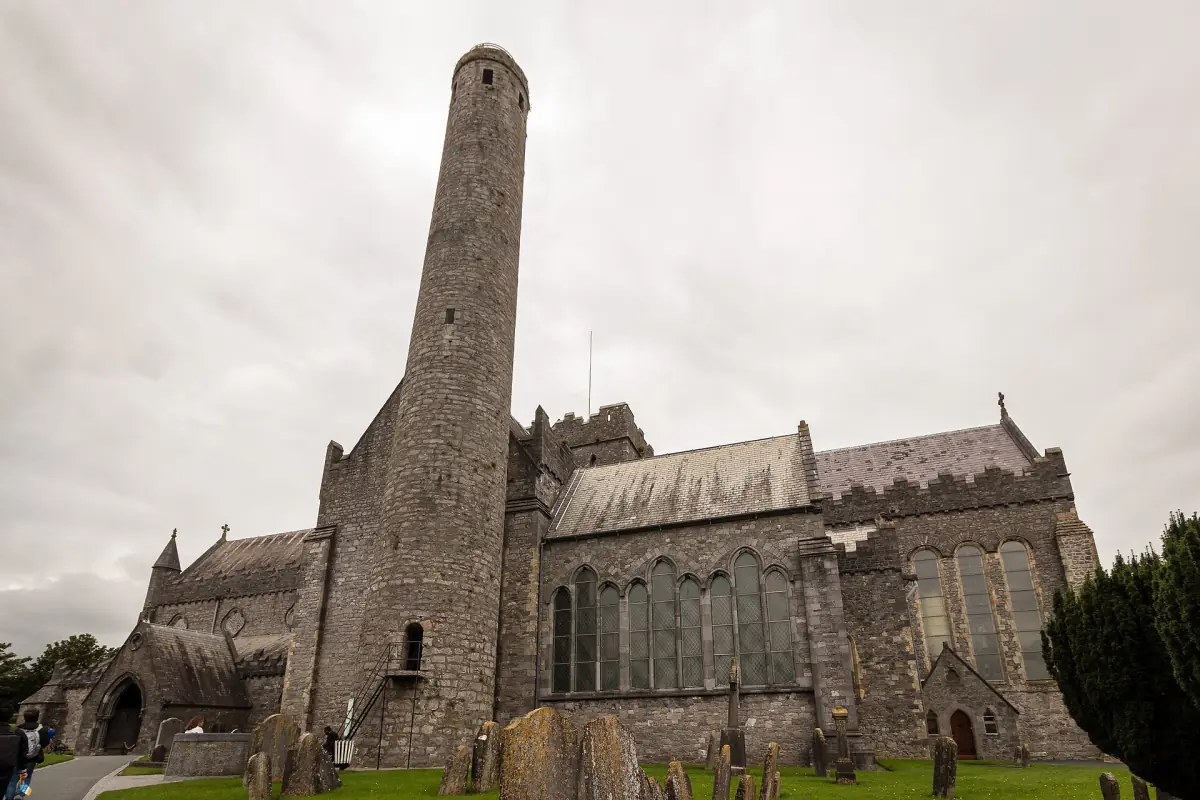
Cathedral and round-tower admission
Choose cathedral access with a self-guided map and the tower climb, subject to opening and weather conditions.
Art, architecture and the market
Butler Gallery at Evans’ Home on John’s Quay offers free exhibition admission. Groups need a booking. Its normal pattern is Tuesday to Saturday, with Sunday opening and Monday closure except statutory public days off. It is an indoor alternative for visitors whose interests extend beyond medieval buildings, rather than another castle room.
Black Abbey is a Dominican church founded in 1225 and rededicated as a place of worship in 1864. Treat services as worship, with sightseeing fitted around the church’s use. Across the city, the cathedral, Rothe House and the Victorian remodelling of the castle show different architectural periods; the city is more interesting when those differences stay visible.
The Farmers Market takes place on The Parade in front of the castle on Thursday, 09:30 to 14:30. Make that a food stop in your own itinerary. The food and tasting page separates organised tastings from a market visit, so you can choose the experience you actually want.
Nearby abbeys, Dunmore Cave and Inistioge
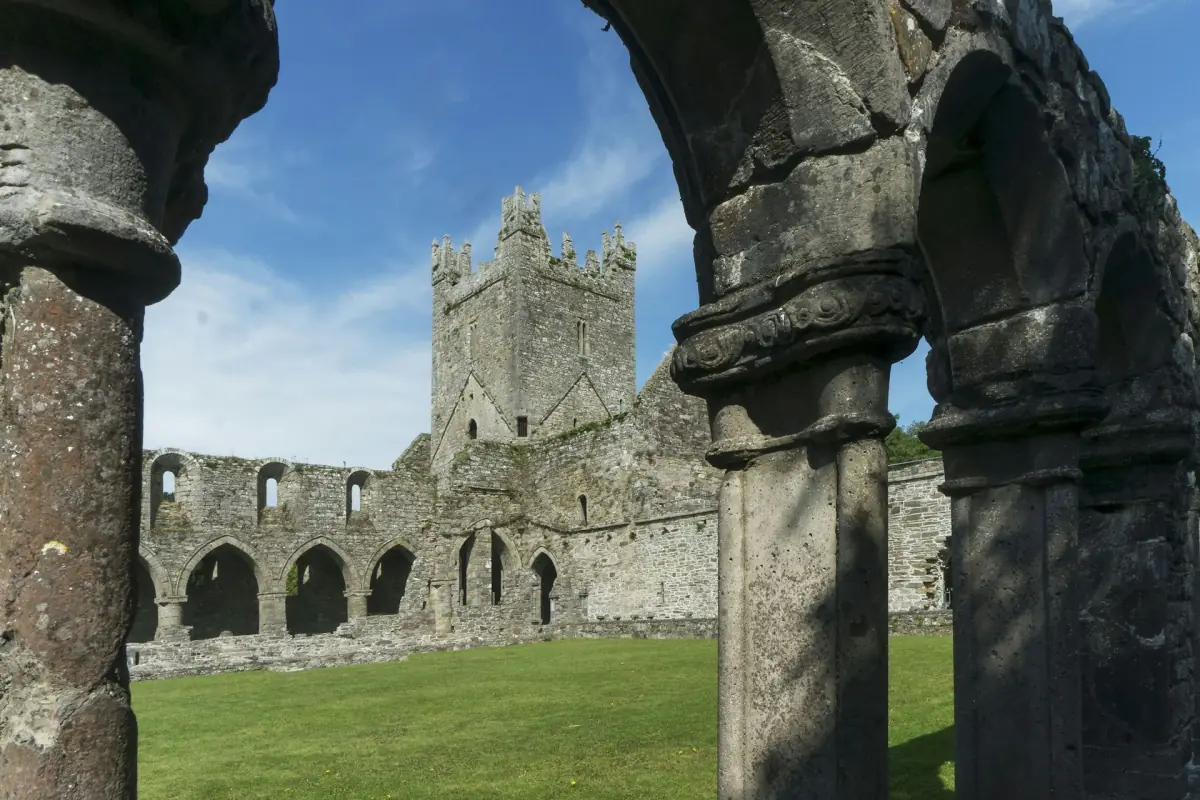
Jerpoint Abbey offers medieval stone sculpture and a transition from Romanesque to Gothic architecture. Its 2026 visitor season runs from 5 March to 2 December, with last admission 45 minutes before closing. Only assistance dogs are allowed; climbing and barbecues are prohibited. Kells Priory has a fortified monastic enclosure and uneven paths. Since 31 August 2026, visits are self-guided; keep dogs on leads.
Dunmore Cave is a guided visit throughout the year. Its 700 steps, wet and cold interior and uneven ground make it a different undertaking from an urban museum. It is not wheelchair accessible. Families need suitable footwear and no more than three children per supervising adult; very young children may find the visit unsuitable.
For Inistioge, consider Woodstock’s gardens and woodland walks. Admission is 5 EUR per car, rather than per person. Dogs stay on leads, and the gardens close for a yellow wind warning or an orange or red weather warning. Choose between a city day and a rural excursion instead of squeezing every location into one itinerary.
Rock of Cashel
For a separate excursion, use the dedicated Rock of Cashel guide. Keep that visit distinct from your Kilkenny city route, leaving this page focused on choosing local sights and nearby places.

Questions about your visit
What should I prioritise on a first visit?
Start with the castle and cathedral ends of the Medieval Mile, then choose Rothe House, the museum or Butler Gallery according to your interests. Leave room for separate interior visits.
Which sights need extra care with children?
The round tower has ladders and 121 steps. Dunmore Cave involves 700 steps and allows at most three children per supervising adult. Choose activities around the children’s ability and the access rules.
Is Kells Priory currently a guided visit?
Since 31 August 2026, Kells is self-guided. The paths are uneven, and dogs must remain on leads. Treat it as a separate rural stop when planning transport.